Playground shelters for schools are permanent covered structures that turn the existing playground into a year-round outdoor space for wet play, sun protection, lunchtime activity, EYFS and SEND provision, removing the British weather as a reason to keep pupils indoors. A well-specified playground shelter takes pressure off halls and corridors during wet break times, supports outdoor learning across the curriculum and can be installed within 10 working days with no groundworks required.
Every UK school knows the wet playtime pinch point: the rain comes, the playground empties, and indoor halls and classrooms fill up with pupils with nowhere to move. A properly designed playground shelter solves that for good. This guide explains the use cases, the design choices that matter, and how Protect Canopies installs playground shelters across UK primary, secondary and SEND schools.
Why Playground Shelters Matter for UK Schools
The playground is one of the most heavily used parts of a school site, but its usefulness collapses the moment the weather turns. A covered shelter changes that.
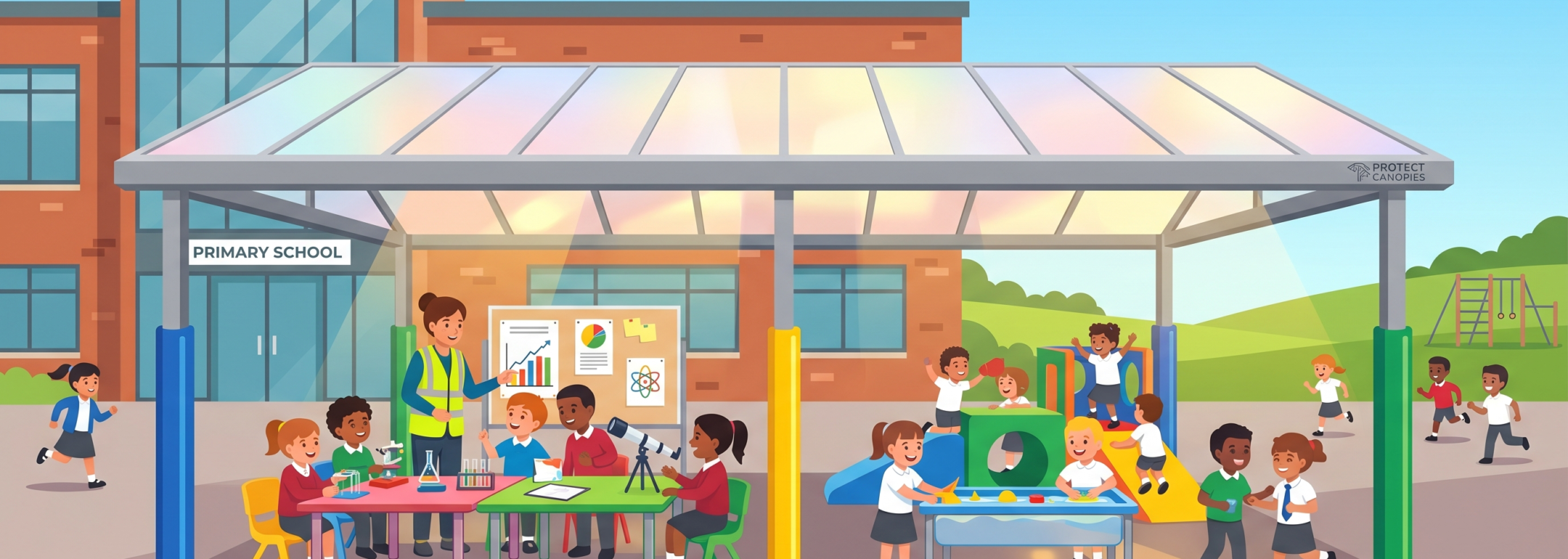
- Wet play stays outside, taking pressure off indoor halls, corridors and classrooms during rain.
- Sun protection in summer keeps younger and SEND pupils out of harsh UV exposure during the hottest months.
- Active break times year-round support physical health, focus and behaviour back in the classroom.
- EYFS and SEND outdoor provision can be delivered to a predictable timetable rather than collapsing on rainy days.
- Outdoor lessons can be planned with confidence, supporting curriculum delivery for science, PE and forest school.
Types of Playground Shelter
Free-Standing Playground Canopies
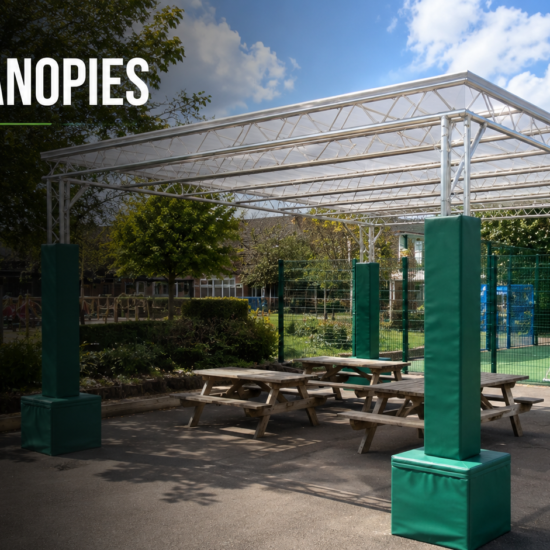
The most common type, free-standing playground canopies sit on the existing surface and cover a defined zone of the playground. They work well for break-time activity, group games, EYFS play and outdoor lessons, and can be specified up to large spans without intermediate posts.
Wall-Mounted or Lean-To Shelters
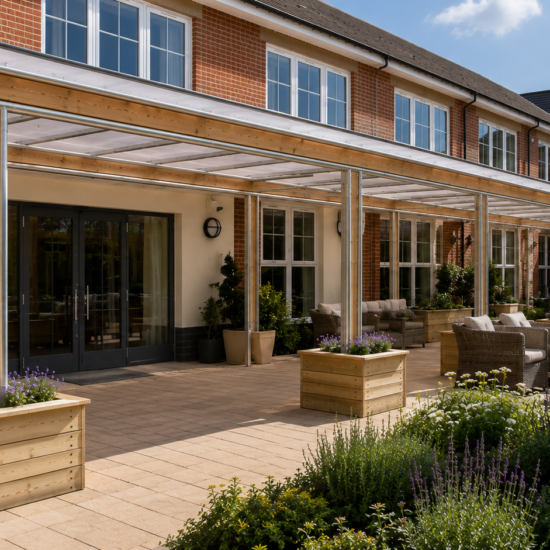
Where the playground is bordered by a school building, a wall-mounted or lean-to shelter extends usable covered space directly from the wall. Modern systems can extend up to 6 metres without support posts, creating a clear covered area immediately adjacent to classrooms or halls.
Covered MUGAs and Sports Areas
For schools that want to keep PE, games and after-school clubs running through the winter, a larger playground shelter over an all-weather pitch or MUGA can effectively double timetable hours without the cost of a new sports hall.
Sensory and SEND-Specific Shelters
SEND-specialist schools and mainstream schools with SEND units use playground shelters as predictable, sensory-friendly outdoor spaces. See our SEND school canopies guide for the design considerations specific to SEND provision.
Design Considerations for a School Playground Shelter
- Diffused light through the roof: our opal Sunlite™ roof distributes daylight evenly without harsh glare or hot spots, while filtering UV.
- Aluminium framework: rust-proof, low-maintenance, powder-coated in any RAL colour to match the school’s branding or a calmer SEND-friendly palette.
- Side panels and shielding: clear or coloured side panels add wind protection, privacy and sensory boundary without making the space feel enclosed.
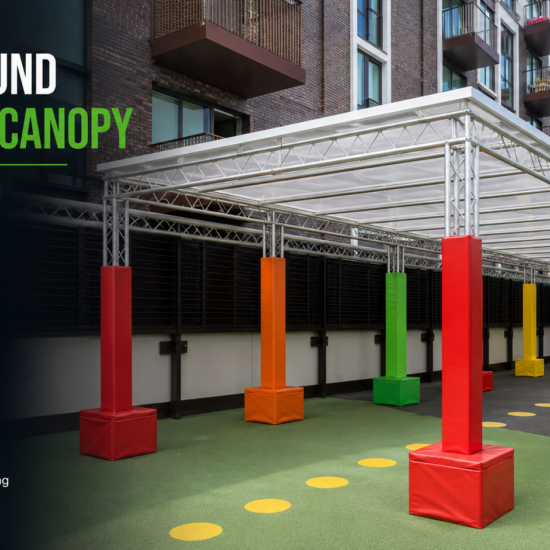
- Padded post pads: particularly important for primary and EYFS playgrounds, doubling as bright visual cues.
- Clear sightlines for supervision: playground shelters need staff supervision during break and lunchtime, so the design keeps sightlines from duty stations clear.
- Lighting and signage: useful for darker autumn and winter break times, and for signage about wet-play rules or accessible routes.
Why Protect Canopies Works for School Playgrounds
Whichever shelter type fits your playground, the system underneath has to deliver structural confidence and minimal disruption. Protect Canopies gives you both:
- No groundworks or foundations: our specially designed ballast blocks act as a surface-mounted foundation, suitable for tarmac, concrete, block paving and most playground surfaces.
- Certified to BS 6399: Part 2 for wind and snow loading by independent structural engineers, with calculations supplied for funding bids and planning.
- Installed in just a few hours, with no plant required and minimal disruption to pupils.
- Lead times typically within 10 working days of order, so the shelter is ready for the next half term rather than the next academic year.
- Trusted by the NHS and HMPPS alongside the education sector, where compliance and pupil safety are non-negotiable.
- Bespoke design service: over 25 years of design expertise, with free site visits and CAD visuals included.
Funding a Playground Shelter
UK schools can fund a playground shelter through several routes:
- School Condition Allocation for maintained schools.
- Condition Improvement Fund (CIF) for academies and sixth-form colleges.
- DfE High Needs Provision Capital Allocation where the shelter supports SEND provision.
- Local authority capital for community-linked or place-planning projects.
- Section 106 contributions from local development.
- Charitable trusts and PTA / Friends fundraising for supplementary funding.
Our team can supply structural calculations, CAD designs and project costings to support funding bids.
Frequently Asked Questions
What is a playground shelter for a school?
A playground shelter is a permanent covered outdoor structure on a school site that protects pupils, staff and equipment from rain, wind, sun and ice while keeping the playground usable for break times, lunchtime activity, outdoor lessons and SEND provision year-round.
How quickly can a playground shelter be installed?
Most school orders are installed within 10 working days, with on-site installation typically a matter of hours. Our system uses surface-mounted ballast rather than excavated foundations, so there is no plant or curing time on site.
Do playground shelters need planning permission?
Many playground shelters fall within permitted development for educational buildings, but requirements vary by site, listed-building status and local authority. Our team will advise on whether your project needs consent and supply drawings to support any application.
Are playground shelters safe under UK weather conditions?
Yes. Every Protect Canopy is certified by independent structural engineers and conforms to BS 6399: Part 2 wind and snow loading requirements, the recognised UK standard for structural performance under British weather.
Can a playground shelter be installed on tarmac or concrete?
Yes. Our surface-mounted ballast system works on tarmac, concrete, block paving and most stable playground surfaces without the need for excavated foundations.
What size playground shelter does a primary school need?
Sizes vary by use. A typical wet-play shelter starts around 8 m by 6 m, while EYFS canopies often work well at around 6 m by 4 m extending from the classroom. For larger covered MUGA shelters, spans can run up to 30 m or more. Our designers will size to your playground and pupil numbers.
Talk to Protect Canopies About Your School Playground Shelter
If you are a primary, secondary or SEND-specialist school, a multi-academy trust estates lead, a local authority capital programme team or a parent-governor exploring options, talk to Protect Canopies. Our team will visit the site, talk through use cases with your headteacher and site manager, and produce a tailored design and quotation. With ten-working-day lead times, your playground shelter can be in use within a fortnight of order.
Related blogs:
- How to Fund a School Canopy: 2026 Grants and Funding Guide
- 6 Canopy Ideas for School Settings
- How School Canopies Can Create Outdoor Spaces In All Weathers
- SEND School Canopies: Sensory and Outdoor Learning Spaces for SEND Settings
- How Schools Can Adapt to Future Outdoor Learning
- Why Outdoor Canopies Still Support Learning in the Winter
- Cleaning Your School Canopy
- What to Do with Your School Canopy Before, During & After a Storm