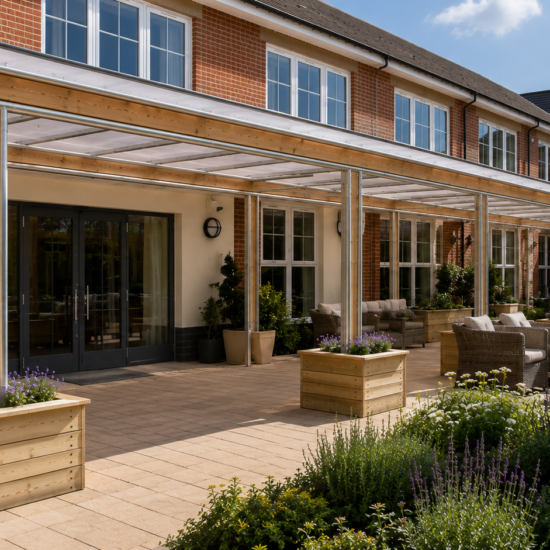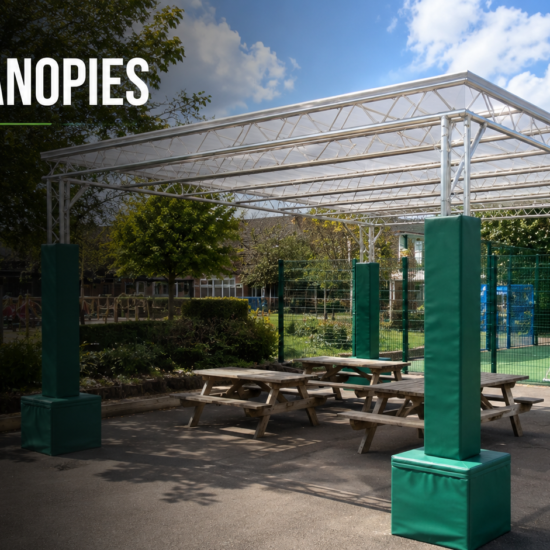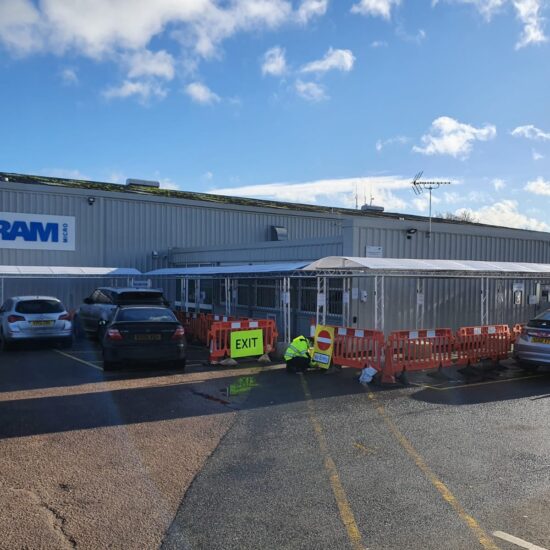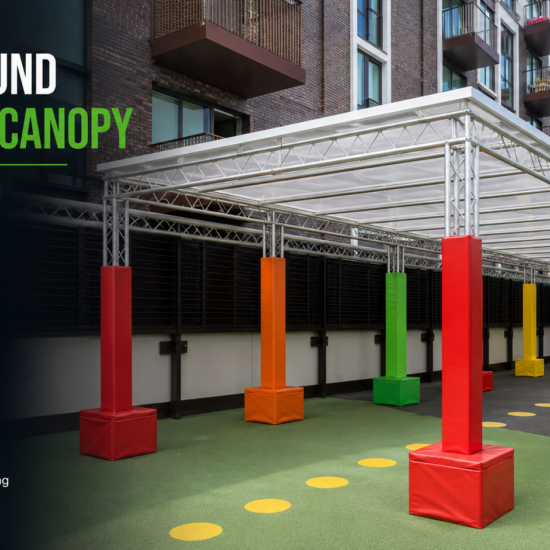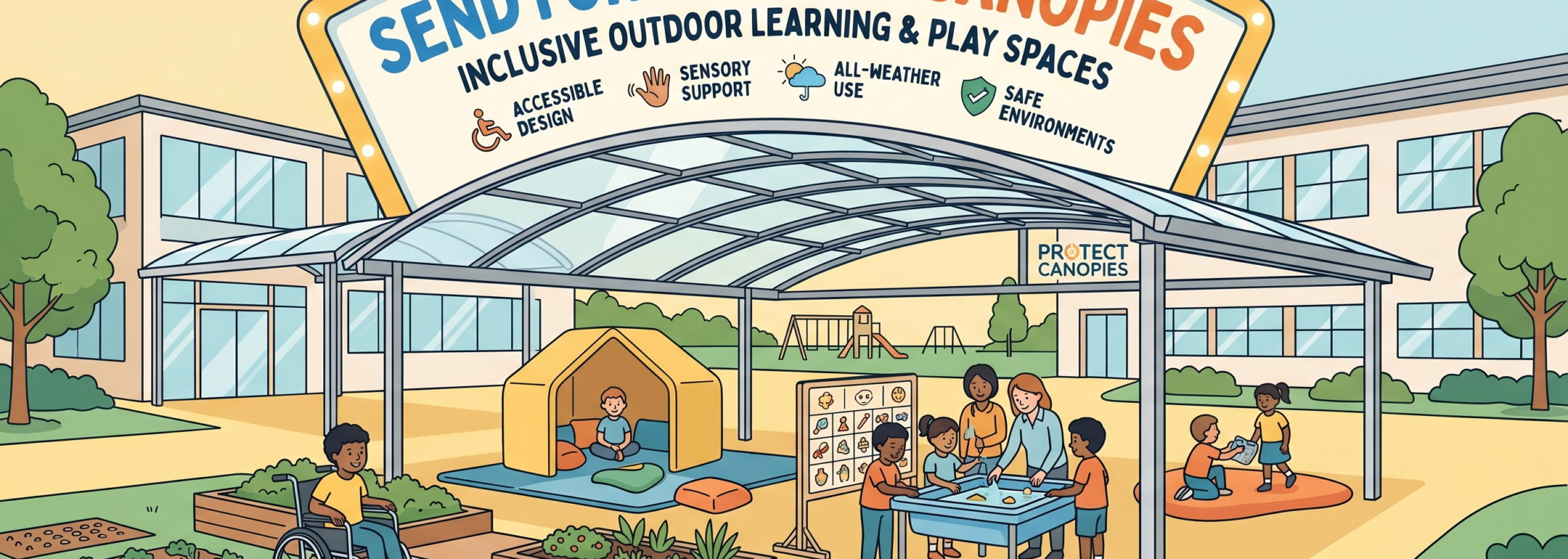
A SEND school canopy is a covered, weather-protected outdoor structure designed to support pupils with Special Educational Needs and Disabilities through predictable sensory environments, accessible breakout space and shelter for outdoor learning and therapy sessions, regardless of weather. For SEND-specialist settings, mainstream schools with SEND units and resourced provisions, a well-designed canopy turns previously unusable outdoor space into a year-round resource that meets EHCP-driven needs and supports Equality Act 2010 reasonable adjustments.
Around 1.7 million pupils in England were identified with Special Educational Needs in 2024, with more than 430,000 holding an Education, Health and Care Plan (EHCP). For many of these children, the indoor classroom is often the most challenging environment, and the outdoor environment is often the most calming. The barrier is the British weather and the lack of predictable, sheltered outdoor space that pupils, staff and parents can rely on.
That is the gap a properly specified school canopy fills. This guide explains why canopies matter specifically for SEND settings, the use cases they support, the design choices that matter most, and how Protect Canopies works with SEND specialists, mainstream schools and local authorities.
Why Outdoor Space Matters Specifically for SEND Pupils
Outdoor environments support SEND pupils in ways that are well documented across educational and clinical literature. A covered outdoor space delivers the calming benefits of being outside while removing the unpredictability of British weather, which is itself a sensory and behavioural trigger for many SEND pupils.
- Sensory regulation: diffused natural light, controlled airflow and softer acoustics outdoors help regulate sensory input for autistic and sensory-processing pupils.
- Movement and proprioception: covered space allows for daily access to gross-motor activity, which supports focus and emotional regulation for ADHD and SEND pupils more broadly.
- Predictable routines: a permanent covered space enables daily outdoor routines that pupils can rely on, which is essential for autistic learners who depend on predictability.
- Calm-down and breakout zones: a sheltered outdoor area gives SEND pupils a regulated alternative when indoor classrooms become overwhelming.
- Therapy and intervention space: speech and language, occupational therapy and physiotherapy sessions can take place in a sheltered outdoor environment that many pupils find easier than a clinical room.
SEND School Canopy Use Cases
SEND-specialist schools, mainstream schools with SEND units and resourced provisions all use canopies to support a range of pupil needs.
Sensory Gardens and Outdoor Classrooms
A covered sensory garden or outdoor classroom protects sensory equipment, planted areas and pupils alike from rain, wind and harsh sun. Pupils can use the space every day, not just on dry afternoons, and staff can plan structured sensory sessions with confidence that the weather will not cancel them.
Calm-Down and Regulation Spaces
A sheltered outdoor calm-down area gives pupils somewhere to regulate that is neither the indoor classroom nor the corridor. Staff can supervise easily, the lighting is naturally diffused rather than fluorescent, and the change of environment alone often resets a dysregulated state more effectively than any indoor intervention.
Wheelchair-Accessible Covered Walkways
For pupils with physical disabilities or mobility aids, navigating between buildings in poor weather is harder, slower and more tiring than for non-disabled peers. Covered walkways remove that barrier, contributing directly to Equality Act 2010 reasonable adjustments and making the school site genuinely accessible whatever the weather.
Outdoor Therapy and Intervention Sessions
Speech and language therapists, occupational therapists and physiotherapists working in school often find pupils more responsive in outdoor settings than in clinical rooms. A covered, predictable outdoor space gives therapy teams a reliable session location that is not weather-dependent.
Soft-Play and PE Cover for Pupils Who Need It
Pupils with sensory processing or social communication needs sometimes find indoor PE halls overwhelming. A covered outdoor PE or soft-play space offers the same physical benefits in an environment many SEND pupils cope with far more easily.
Sheltered Drop-Off and Reception Areas
For pupils with anxiety, autistic pupils who struggle with transitions, or pupils arriving by patient transport, a sheltered drop-off and reception area reduces the friction of arriving at school in poor weather. It also supports parents and carers, especially those managing wheelchairs, frames or other mobility equipment.
Design Considerations Specific to SEND Settings
A SEND school canopy is not a generic shelter with a different sticker on it. The design choices that matter for SEND pupils differ from those for mainstream classrooms, and getting them right at the specification stage costs the same as getting them wrong.
- Diffused natural light: our opal Sunlite™ roof distributes daylight evenly without the glare or harsh shadows that can trigger sensory distress in some SEND pupils. The roof allows daylight through while filtering UV.
- Controlled acoustics: the roof material and structural design dampen the harsh drumming sound that some flat-roof shelters produce in heavy rain, which matters for sound-sensitive pupils.
- Step-free, accessible install: our surface-mounted ballast system means no excavated foundations, raised thresholds or trip hazards introduced at the canopy edge.
- Powder-coated framework in low-stimulation colours: the aluminium framework can be specified in calm colours that match a school’s sensory environment rather than visually intrusive options.
- Side panels and shielding: clear or coloured side panels give privacy, wind protection and a defined sensory boundary without making the space feel enclosed.
- Sized for wheelchairs and equipment: dimensions tailored to accommodate manual and powered wheelchairs, sensory trolleys, hoist tracks and standing frames as needed.
Compliance: Equality Act 2010, EHCPs and the SEND Code of Practice
Three statutory frameworks make accessible, weather-protected outdoor space more than a nice-to-have for schools.
- Equality Act 2010: schools and local authorities have a duty to make reasonable adjustments so that disabled pupils are not placed at a substantial disadvantage. Covered, accessible outdoor space removes a substantial barrier that pupils with mobility or sensory needs face when arriving, learning or moving between buildings in poor weather.
- SEND Code of Practice (2015): the statutory guidance for schools, settings and local authorities sets out the expectation that schools support outcomes across education, health and social care for SEND pupils. A reliable outdoor environment supports the outcomes-led approach the Code requires.
- EHCPs: many EHCPs specify environmental adjustments, sensory provision, regular outdoor regulation breaks or therapy delivery requirements that depend on a predictable outdoor space being available.
Funding Routes for SEND School Canopies
SEND schools and mainstream settings with SEND provisions can fund a canopy through several established routes:
- DfE High Needs Provision Capital Allocation for SEND-specific environmental works.
- School Condition Allocation and Condition Improvement Fund (CIF) for academies, where canopy works support condition or accessibility improvements.
- Local authority capital where the works are part of a wider SEND place-planning programme.
- Section 106 contributions where new local development funds school capital improvements.
- Charitable trusts and foundations active in SEND environmental adjustments.
Our team can supply the structural calculations, design drawings and project costings needed for funding bids and EHCP-related capital applications.
Why Protect Canopies Works for SEND Settings
Our system is built for the speed, accessibility and reliability that SEND-specialist settings need:
- No groundworks or foundations: our specially designed ballast blocks act as a surface-mounted foundation, suitable for playgrounds, hardstanding and most school surfaces, with no excavation, no curing time and no disruption to pupils.
- Certified to BS 6399: Part 2 for wind and snow loading by independent structural engineers, with calculations supplied for funding bids and planning.
- Installed in just a few hours, with no plant required and minimal disruption to pupils, transition routines or therapy timetables.
- Lead times typically within 10 working days of order, so the space is ready for the next half term rather than the next academic year.
- Trusted by the NHS and HMPPS alongside the education sector, where compliance, safeguarding and pupil safety are non-negotiable.
- Bespoke design service: our in-house design team and structural engineers tailor each canopy to the specific SEND brief, including dimensions, side panels, lighting, signage and accessible-route detailing.
Frequently Asked Questions
What is a SEND school canopy?
A SEND school canopy is a weather-protected outdoor structure specified for the needs of pupils with Special Educational Needs and Disabilities. It supports sensory regulation, outdoor learning, therapy delivery, accessible movement between buildings and predictable daily routines, all of which are particularly important for SEND pupils.
Are canopies an EHCP-relevant adjustment?
Yes. Where the EHCP specifies environmental adjustments, sensory provision, regulation breaks or outdoor therapy delivery, a canopy can be the practical mechanism that allows those provisions to be delivered reliably year-round.
Will a canopy help with Equality Act 2010 reasonable adjustments?
A weather-protected, accessible outdoor space removes a substantial barrier disabled pupils face when arriving, learning or moving between buildings in poor weather. This is one of the most visible reasonable adjustments a school can make under the Equality Act 2010.
Can the canopy be installed without disrupting pupils or therapy timetables?
Yes. Our canopies use surface-mounted ballast rather than excavated foundations, so there is no plant or curing time on site. On-site installation typically takes a few hours, and we plan installs around school sensitivities such as timetables, sensory windows and transition periods.
Are the canopies suitable for wheelchair and mobility-aid users?
Yes. Our system is step-free at the canopy edge, with no raised thresholds. We can specify dimensions and access routes to suit manual and powered wheelchairs, standing frames, hoist tracks and sensory trolleys.
How quickly can a SEND school have a canopy installed?
Most school orders are installed within 10 working days, with on-site installation usually a matter of hours. That timeline supports half-term delivery rather than waiting an academic year for traditional construction.
What funding routes can be used for a SEND school canopy?
Common routes include the DfE High Needs Provision Capital Allocation, School Condition Allocation, Condition Improvement Fund for academies, local authority SEND capital, Section 106 contributions and charitable trust funding. Our team can supply structural calculations and costings for bids.
Talk to Protect Canopies About Your SEND School Canopy
If you are a SEND-specialist school, a mainstream school with a SEND unit, a local authority planning SEND provision or a parent or governor exploring environmental adjustments under an EHCP, talk to Protect Canopies. Our team will visit the site, talk through pupil-specific needs with your SENCo and senior leadership team, and produce a tailored design and quotation. With ten-working-day lead times, your space can be in use within a fortnight of order.
Related blogs:
- How to Fund a School Canopy: 2026 Grants and Funding Guide
- How Schools Can Adapt to Future Outdoor Learning
- Why Outdoor Canopies Still Support Learning in the Winter
- The RAAC Crisis & UK School Rebuilding: How Canopies Are Supporting the Transition to Safer Schools
- What to Do with Your School Canopy Before, During & After a Storm
- Caring for Your School Canopy in Snowy Weather
- How to Protect Disabled and Elderly Visitors from Weather Exposure at Your Building Entrance
- Enhancing Schools’ Outdoor Spaces for Children to Connect With Nature
- How Can a Canopy Improve an Early Years Setting?