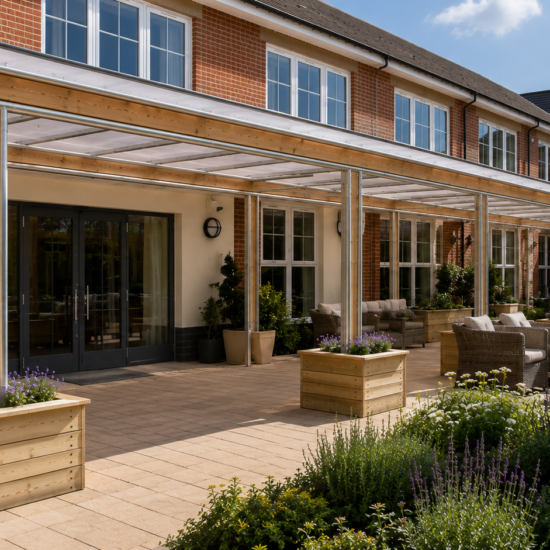
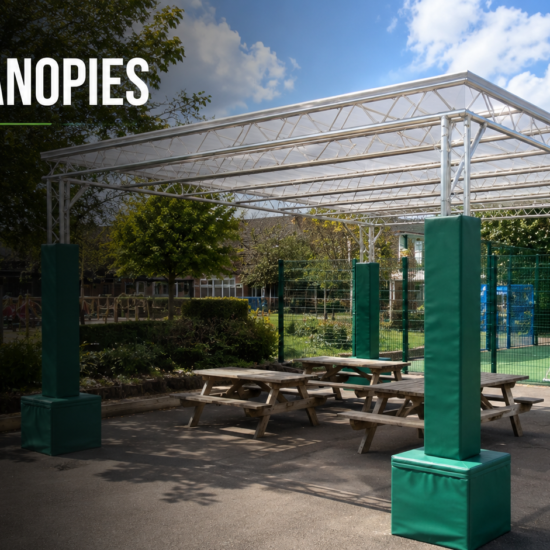
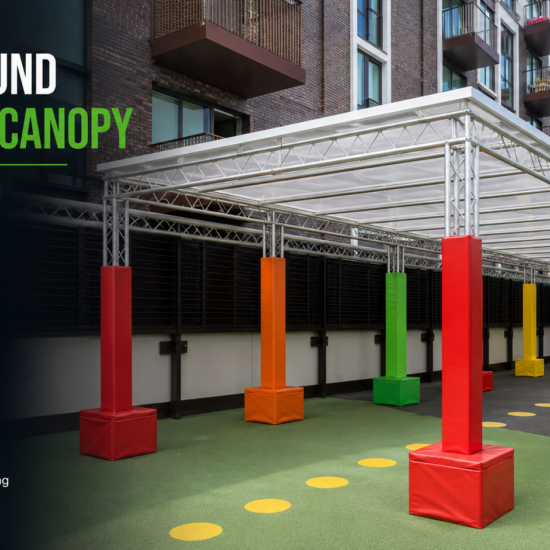
A covered walkway is a roofed pedestrian route that protects people from rain, wind, snow and sun as they move between buildings or across a site. Its core purpose is to keep pedestrians dry, safe and comfortable, while improving accessibility, reducing slip risk and giving a site a more joined-up, professional feel. Covered walkways are used everywhere from schools and hospitals to shopping centres, care homes, prisons and transport hubs.
Below we explain exactly what a covered walkway is for, the different types available, and where you are most likely to see one in use across the UK.
The Purpose and Benefits of a Covered Walkway
A covered walkway serves several purposes depending on the setting, but the benefits are consistent:
- Protection from all weather: shelter from rain, snow, wind and harsh sun so people stay dry and comfortable year-round.
- Safety: a clearly defined path that separates pedestrians from car parks and roads, reducing slip, trip and traffic risk.
- Accessibility: a level, sheltered route makes moving around far easier for wheelchair users, people with mobility aids and anyone with sensory sensitivities, supporting Equality Act 2010 reasonable adjustments.
- Aesthetics: a well-designed walkway ties separate buildings together and gives a site a more polished, cohesive look.
- Functionality: it turns previously exposed outdoor routes into usable space in any weather, from queuing areas to sheltered waiting zones.

Where You Will Find a Covered Walkway
Covered walkways appear anywhere people need a protected route between buildings or across a site:
- Schools, colleges and universities: sheltered links between buildings, plus covered outdoor learning and play space. See our guide to covered walkways for schools.
- Hospitals and medical facilities: protected routes for patients, staff and equipment moving between departments.
- Shopping centres and retail: sheltered connections between stores and car parks that keep shoppers comfortable.
- Transport hubs and airports: covered links between terminals, platforms and car parks.
- Care homes and hospices: safe, sheltered access between buildings for vulnerable residents.
- Prisons and secure settings: controlled, weather-protected movement, where we are a trusted HMPPS supplier.
The Different Types of Covered Walkway
There are several types of covered walkway, each offering a different level of protection and appearance. The most common commercial options are open-sided, enclosed, wall-mounted and dome walkways. For a full breakdown, see our guide to the types of covered walkway.
- Open-sided walkways: a roof on posts, giving overhead shelter with maximum freedom of movement.
- Enclosed walkways: sides glazed in toughened glass or polycarbonate for full protection from wind-driven rain.
- Wall-mounted walkways: fixed to an existing building via brackets, leaving the ground clear of posts on one side.
- Dome and curved walkways: a modern, low-maintenance profile that suits schools and contemporary buildings.
Why Choose a Protect Canopies Covered Walkway?
Our covered walkways are designed to remove the usual obstacles of a traditional build:
- No groundworks or foundations: our specially designed ballast blocks act as a surface-mounted foundation, suitable for almost any location.
- Certified to BS 6399: Part 2 wind and snow loading by independent structural engineers.
- opal Sunlite™ roof giving UV, sun and rain protection, on a robust aluminium frame powder-coated to your colours.
- Installed in just a few hours, with most orders delivered within 10 working days.
- Trusted by the NHS and HMPPS, two of the most demanding sectors in the UK.
Frequently Asked Questions
What is the purpose of a covered walkway?
The purpose of a covered walkway is to provide a roofed, weather-protected route for pedestrians moving between buildings or across a site. It keeps people dry and safe, improves accessibility, reduces slip risk and gives a site a more cohesive, professional appearance.
What is a covered walkway called?
Covered walkways are also known as walkway canopies, covered walkway canopies, colonnades or, historically, arcades. In commercial and public-sector settings the most common term is simply a covered walkway or walkway canopy.
How much does a covered walkway cost?
Cost depends on length, width, roof style and any extras such as side panels or lighting. Our covered walkways start from around £2,950 plus VAT for a 5m x 2m structure with concrete ballast blocks included. We provide a fixed-price quotation and free CAD design before you commit.
Do covered walkways need planning permission?
Many covered walkways fall within permitted development, but requirements vary by site, listed-building status and local authority. Our team will advise and supply drawings and structural calculations to support any application.
How quickly can a covered walkway be installed?
Most covered walkways are installed within 10 working days of order, with on-site installation usually taking only a few hours. There are no groundworks, so there is no curing time or heavy plant on site.
Talk to Protect Canopies About a Covered Walkway
Whether you need to link two school buildings, shelter a hospital route or join up a retail site, Protect Canopies designs and installs covered walkways across the UK. Contact our team for a free site visit and CAD design, or explore our covered walkways page for sizes and pricing.
Related blogs: