UK government policy is steadily shifting asylum accommodation away from hotels and toward modular sites, and the infrastructure that connects those sites, including covered walkways, welfare shelters and queue cover, is becoming a strategic part of the transition. This update summarises the late-September position on the legal and policy landscape and where Protect Canopies fits into the next wave of site delivery.
The month ends with legal drama still unresolved and a clearer governmental push away from hotels, signalling that infrastructure providers like Protect Canopies are increasingly in the strategic spotlight.
Key Developments
- Epping Forest District Council formally lodged its Supreme Court appeal of the Bell Hotel decision.
- Parliamentary speeches emphasised that “every asylum hotel will be closed for good”, reinforcing 2029 as a policy horizon.
- Government briefs confirmed that hotel use has reduced by thousands in recent months, citing a reduction of around 15% in hotel use since December 2024.
- Policy statements and media coverage increasingly treat modular sites as the default replacement for hotels.
- Local authorities across England signalled readiness to fight or negotiate over site use, particularly around planning and community impact.
Implications and Opportunities
- The Supreme Court’s decision (if accepted) could set one of several national precedents either enabling or constraining hotel-to-modular transitions.
- Even without legal clarity, the push toward modular sites is likely irreversible. The question is when and where.
- Deployment speed and infrastructure quality will increasingly define which site proposals secure planning, funding and favourable attention.
Protect Canopies: Positioned for the Next Wave
In this transition period, Protect Canopies is strategically placed to enable the shift from hotels to modular accommodation:
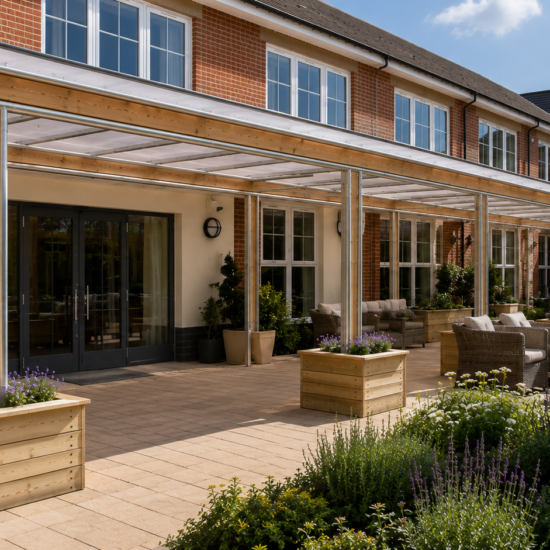
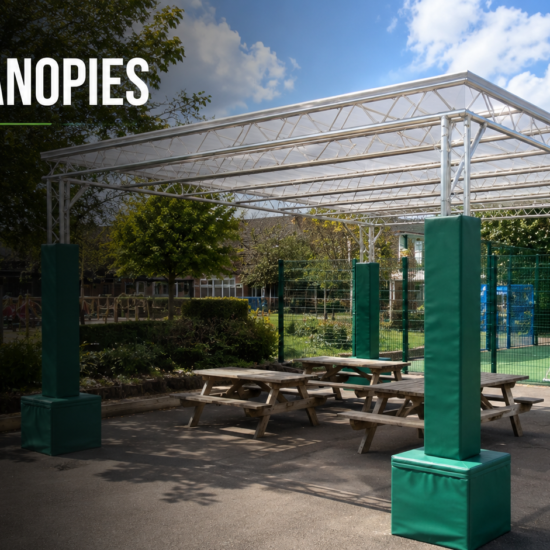
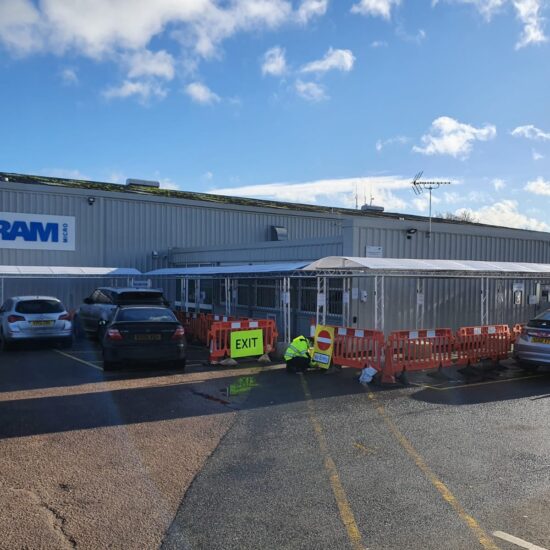
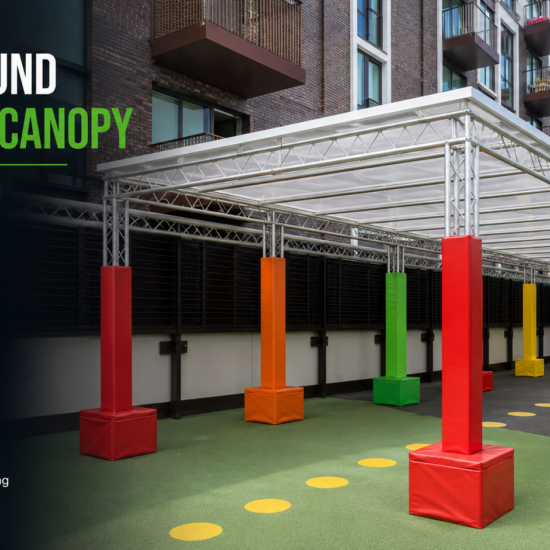
- Plug-and-play infrastructure: supporting early movement, welfare provision, queuing and circulation.
- Modular add-on paths and extensions: able to scale with accommodation wings as sites grow.
- Detail expertise: interface flashings, shielding, drainage and side panels that help sites secure planning consent and pass inspection.
- Proven reliability: a heritage of supplying secure environments, including the NHS and HMPPS, which gives credibility in sensitive asylum accommodation settings.
Our system uses surface-mounted ballast rather than excavated foundations, is certified to BS 6399: Part 2 wind and snow loading, and is typically installed within 10 working days of order, well suited to phased modular site delivery.
Frequently Asked Questions
What infrastructure do modular asylum accommodation sites need?
New modular accommodation clusters typically need covered walkways linking units, queue and reception shelters for arrivals and security, welfare canopies for dining or waiting, and integration detailing where canopies meet modular buildings. The quality of these elements affects both planning consent and day-to-day site operation.
Why is the UK moving asylum accommodation away from hotels?
The Home Office has stated that hotel use is an inefficient use of public funds. Government policy targets the closure of every asylum hotel by 2029, with modular sites, dispersal housing and former military bases taking a larger share of provision.
How quickly can canopy infrastructure be installed on a modular site?
Protect Canopies systems use surface-mounted ballast, so there are no groundworks or curing time. Most installations are completed within 10 working days of order, with on-site installation taking a matter of hours.
How does Protect Canopies support local authorities with planning?
Well-designed walkways, welfare shelters and circulation cover help demonstrate a thought-through site layout, which can support planning submissions. Our canopies are independently certified to BS 6399: Part 2 and our team can supply structural calculations and design drawings to accompany planning applications.
Related blogs: