The Future Asylum Contracts Accommodation (FACA) programme is the Home Office’s £10 billion, seven-year procurement that will replace the current asylum support and accommodation contracts, with an Industry Day in the week of 13 April 2026 and a tender notice expected on 11 September 2026. For site infrastructure suppliers, walkway and shelter providers, and local authorities, FACA is the most consequential UK accommodation procurement of the decade.
The UK government’s commitment to phase out asylum hotels by 2029 is creating real demand for an alternative model: modular sites, former military bases, large reception centres and dispersal accommodation, all delivered at speed. FACA is the procurement vehicle that will fund and contract this shift. This guide explains what FACA is, the key dates, the scope of services, and what infrastructure suppliers should be doing now.
What Is FACA?
FACA stands for Future Asylum Contracts Accommodation. It sits inside the wider Future Asylum Contracts Transformation (FACT) programme, formerly known as the Asylum Support and Accommodation Programme (ASAP).
FACA is intended to replace the current generation of asylum accommodation contracts when they expire. The seven-year contract value across the regional lots is reported to be approximately £10 billion. This makes FACA one of the largest single accommodation-related procurements in UK government history, and the primary vehicle through which the 2029 hotel phase-out target will be delivered.
FACA Key Dates and Timeline
- Week of 13 April 2026: Home Office Industry Day for prospective suppliers and partners.
- 11 September 2026: Estimated publication date for the tender notice on Find a Tender.
- 2027 onward: Contract award and mobilisation phase.
- 2029: Government target for ending asylum hotel use, with FACA contracts running through this transition.
Scope of Services Under FACA
FACA covers the full lifecycle of asylum accommodation provision:
- Accommodation procurement and management: identifying, acquiring and maintaining a diverse range of safe, legally compliant accommodation, including modular buildings, former military bases, dispersal housing and medium-sized sites of 200 to 700 places.
- Regulatory compliance: ensuring accommodation aligns with statutory and regulatory standards, including health and safety, planning and building regulations.
- Local authority engagement: approval and allocation in collaboration with local authorities, who hold planning powers and significant local knowledge of community impact.
- Site operation: day-to-day running of accommodation, including welfare, security and resident services.
- Transition delivery: safely moving residents from hotels to alternative accommodation as part of the wider phase-out.
How Suppliers Engage with the FACA Process
The Home Office has structured FACA engagement to give suppliers visibility well in advance of the tender notice. The process includes:
- DUNS registration: organisations must hold a valid DUNS number from Dun and Bradstreet.
- Expression of Interest: suppliers email the Home Office FACA team to register interest.
- Non-Disclosure Agreement: following expression of interest, suppliers receive a countersigned NDA and access to the Background Note, which sets out the services in scope, engagement process and timelines.
- Industry Day: formal supplier briefing in the week of 13 April 2026, covering scope, lots, evaluation criteria and Q&A with Home Office officials.
- Tender publication: the formal Find a Tender notice expected on 11 September 2026.
What FACA Means for Site Infrastructure Suppliers
Prime accommodation contractors will not deliver every element of the new sites themselves. The shift away from hotels and toward purpose-built or repurposed sites creates a clear sub-contracting opportunity for specialist site infrastructure suppliers. Three areas matter most.
1. Speed of Deployment
Modular and large-site delivery requires walkways, queue and reception shelters, and welfare cover that match the speed of the prefabricated buildings themselves. Excavated, foundation-dependent infrastructure is a delivery bottleneck. Surface-mounted, ballasted canopy systems can be installed in hours rather than weeks, removing curing time and heavy plant from the critical path.
2. Planning and Compliance
Local authority planning objections have been a recurring obstacle for new site proposals. Well-designed, structurally certified site infrastructure helps demonstrate a thought-through layout in planning submissions. Independent BS 6399: Part 2 wind and snow loading certification, supplied as part of the design package, gives planners and building control a clear basis for approval.
3. Site Quality and Resident Dignity
The National Audit Office has flagged that large-scale asylum accommodation can cost more than hotels and deliver fewer places than planned, with the £15.4 million Northeye purchase a high-profile cautionary tale. Quality of site infrastructure has a direct effect on operating cost, planning success and the dignity of residents. Specifying covered walkways, welfare canopies and integration detailing at the design stage is much cheaper than retrofitting them later.
How Protect Canopies Supports the FACA Generation of Sites
Protect Canopies has supplied weather-protected infrastructure to demanding sectors including the NHS and HMPPS for years. Our system is built for exactly the delivery speed and quality requirements that FACA-funded sites will demand:
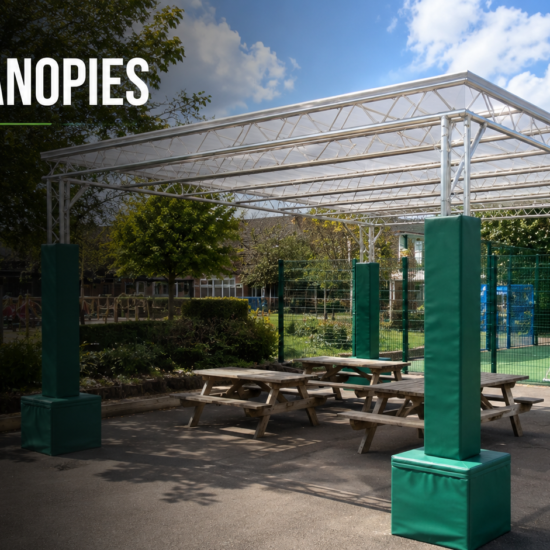
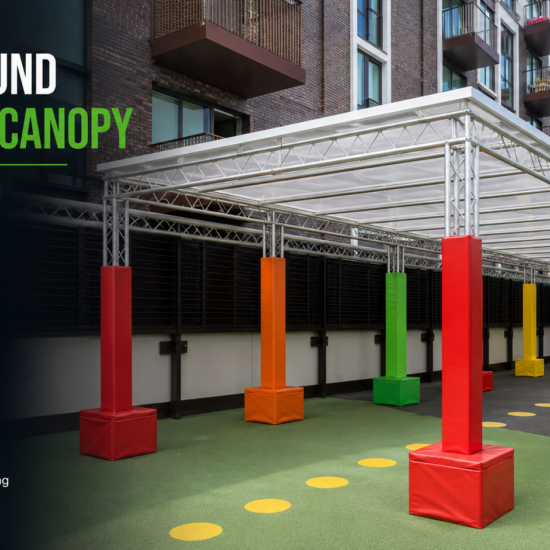
- No groundworks or foundations: our specially designed ballast blocks act as a surface-mounted foundation, suitable for almost any site condition.
- Certified to BS 6399: Part 2 wind and snow loading by independent structural engineers, with calculations supplied to support planning applications.
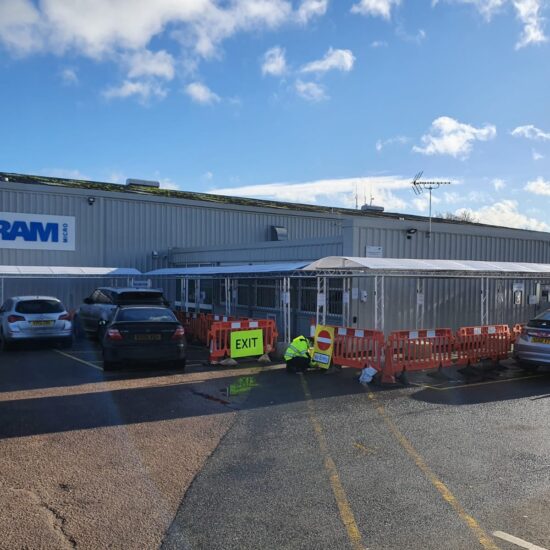
- Installed in just a few hours, with most orders delivered within 10 working days.
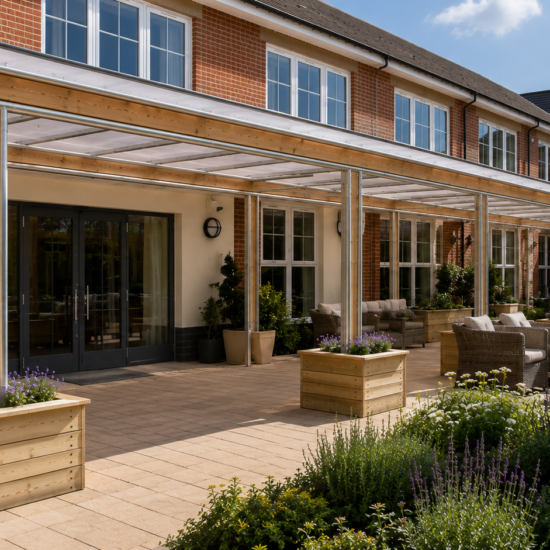
- Modular by design: covered walkways, queue and reception shelters, welfare canopies and integration detailing scale with phased site rollouts.
- Trusted in sensitive operating environments: our heritage in NHS and HMPPS settings translates directly to the security, welfare and circulation needs of asylum accommodation.
Frequently Asked Questions
What does FACA stand for?
FACA stands for Future Asylum Contracts Accommodation. It is the Home Office’s procurement programme to replace the current generation of UK asylum support and accommodation contracts.
How much is the FACA tender worth?
FACA is reported to be a seven-year, approximately £10 billion procurement covering accommodation provision and related services across the UK.
When does FACA go live?
The Home Office Industry Day is in the week of 13 April 2026 and the tender notice is expected on 11 September 2026. Contract award and mobilisation are anticipated through 2027 and beyond, running into the 2029 hotel phase-out target.
How do suppliers register interest in FACA?
Suppliers need a valid DUNS number, must email an Expression of Interest to the Home Office FACA team, and receive a countersigned NDA and Background Note before the formal tender process opens.
How does Protect Canopies fit into FACA-funded sites?
Protect Canopies supplies surface-mounted, ballasted covered walkways, welfare and queue shelters, and integration detailing for modular and large-scale sites. The system is independently certified to BS 6399: Part 2, requires no groundworks, and is typically installed within 10 working days of order.
Will FACA replace the current asylum accommodation providers?
FACA is intended to replace the current asylum accommodation contracts when they expire. The procurement is structured to allow a wider range of providers and sub-contractors to participate, including modular building specialists, large-site operators and specialist infrastructure suppliers.
Talk to Protect Canopies About FACA-Ready Site Infrastructure
If you are a prime contractor, modular building specialist, local authority or operator preparing for the FACA tender, talk to us early about the covered infrastructure your sites will need. Our team can supply structural calculations, design drawings and project programmes to support both planning submissions and bid preparation. Contact Protect Canopies today.
Related blogs: