The UK government is intensifying the push to end hotel-based asylum accommodation, with Home Secretary speeches reaffirming the pledge to close every asylum hotel and ministers exploring prefabricated housing on industrial estates as the alternative. The shift is creating real demand for modular site infrastructure, fast-deployment walkways and welfare cover from suppliers who can move at the same pace as the policy.
This week’s headlines reflect a sharper tone from government toward ending hotel-based asylum accommodation, with senior ministers laying down firm targets and exploring new site models.
Key Developments
- Home Secretary speeches reiterated the pledge to close every asylum hotel for good, aligning legal reforms and immigration rules to support that shift.
- Whitehall confirmed growing interest in prefabricated housing on industrial estates as plug-in alternatives to hotels.
- The Home Office reported that daily hotel costs have fallen, from approximately £8.3 million per day in 2023/24 to around £5.77 million per day.
- Legal tensions remain: local planning objections and council appeals continue across England, with more authorities mobilising legal challenges.
- In wider migration policy, the first group of migrants arrived in the UK under the “one in, one out” France-UK agreement.
Implications and Risks
- The government push will increasingly rely on alternative sites already in the pipeline. The risk: delays in infrastructure could create bottlenecks in turning these sites live.
- Planning objections may slow or block new clusters. Well-designed infrastructure (walkways, shelters) will face scrutiny but can also help secure planning consent by showing a thought-through site layout.
- With the hotel-to-modular shift accelerating, the edge will go to suppliers who can deliver fast, modular, connectable infrastructure aligned with phased rollouts.
Protect Canopies in the New Generation of Sites
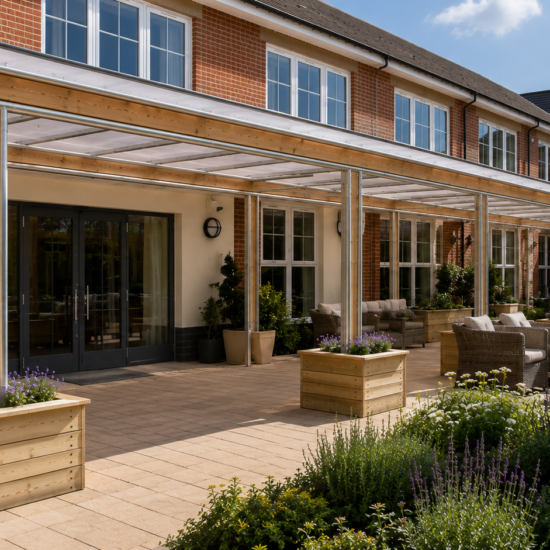
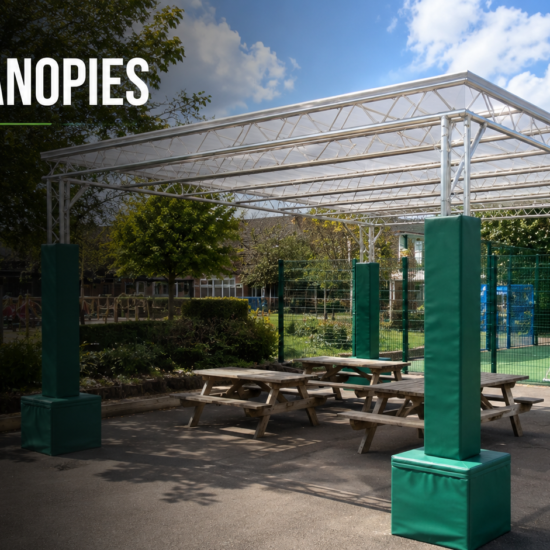
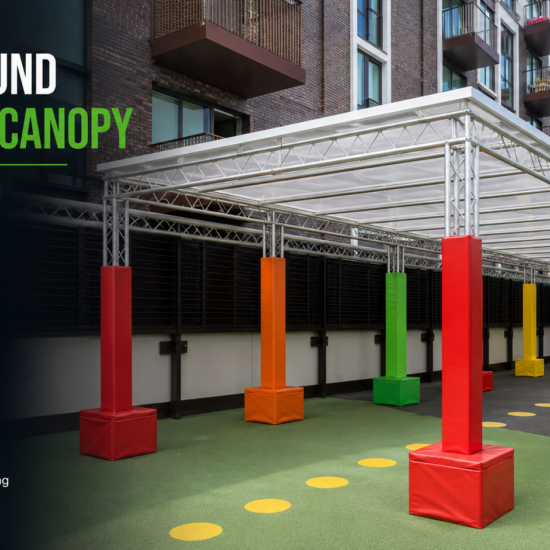
As new clusters of modular accommodation come forward, infrastructure becomes a differentiator. Protect Canopies supports:
- Barebones to finished states: connecting units early in programme phases.
- Flexible layouts: supporting multiple building orientations and phased expansion.
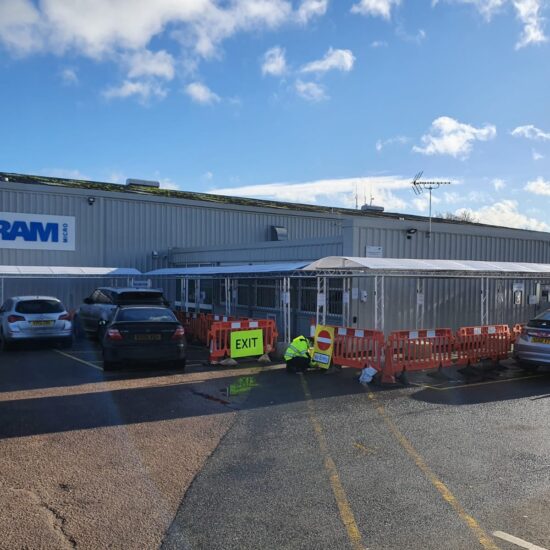
- Dignified movement: covered paths, waiting shelters and welfare cover.
- Seamless integration: clean detailing at the interface with modular units.
Our canopies use surface-mounted ballast (no groundworks), are certified to BS 6399: Part 2 wind and snow loading by independent structural engineers, and are typically installed within 10 working days of order, matching the speed required by phased modular site delivery.
Frequently Asked Questions
What is the UK government’s policy on asylum hotels?
Government policy, restated in Home Secretary speeches, aims to close every asylum hotel by 2029, with prefabricated and modular sites, dispersal housing and former military bases taking a larger share of provision.
What infrastructure do modular asylum sites need?
Typical requirements include covered walkways linking units, reception and queue shelters, welfare canopies for dining and waiting, and detailing where canopies meet modular buildings. The quality of this infrastructure affects both planning consent and day-to-day operation.
Can canopy infrastructure keep pace with phased modular rollouts?
Yes. Protect Canopies systems use surface-mounted ballast, so there are no groundworks or curing time. Most installations are completed within 10 working days of order, supporting phased rollouts where speed matters.
Related blogs: